


English
Views: 0 Author: Site Editor Publish Time: 2026-01-08 Origin: Site
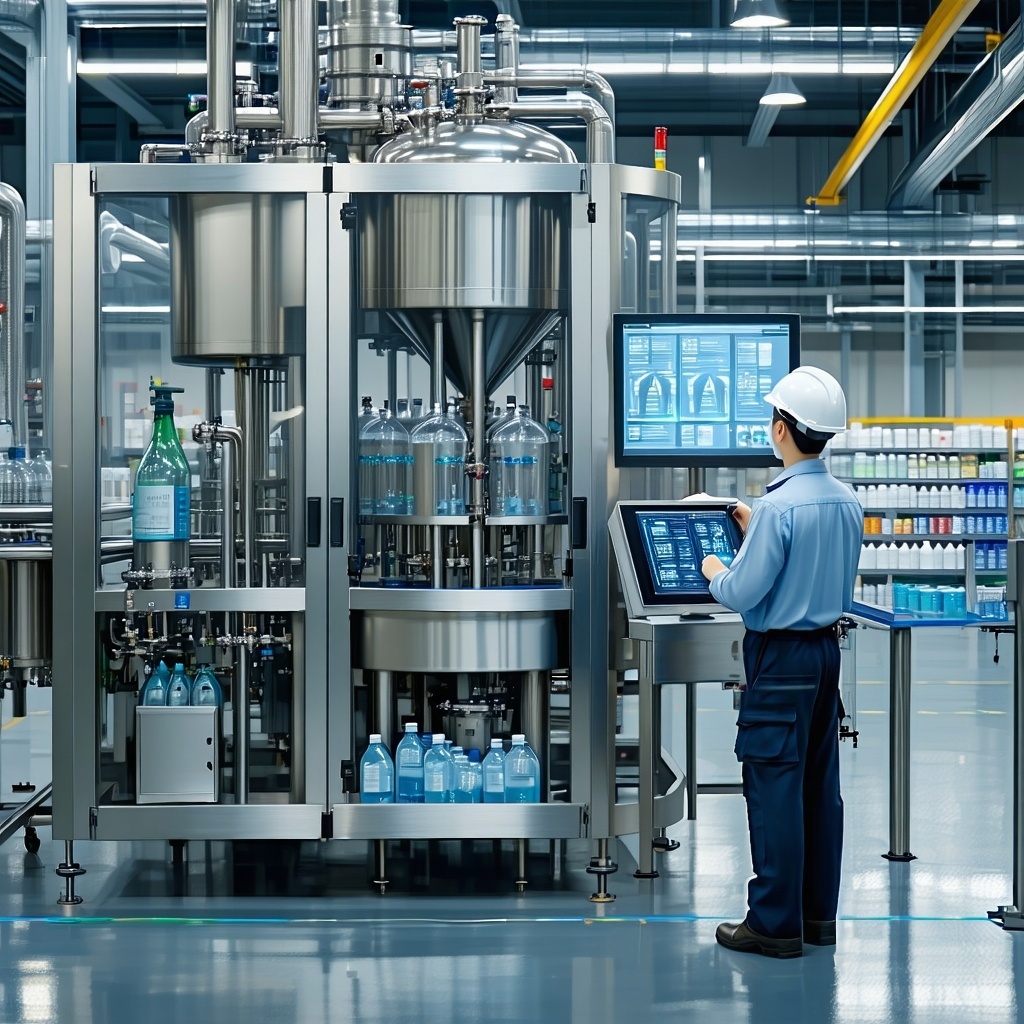
The manufacturing industry is rapidly moving toward smart factories, where machines, systems, and data are seamlessly connected. In this new era of Industry 4.0, liquid filling automation is no longer just about speed—it is about intelligence, flexibility, efficiency, and data-driven decision-making.
Liquid filling machines are evolving into smart, connected systems that help manufacturers reduce costs, improve quality, and stay competitive in a fast-changing market.
A smart factory uses advanced technologies such as:
Industrial automation
Sensors and real-time data collection
PLC and HMI control systems
Industrial Internet of Things (IIoT)
Data analytics and predictive maintenance
In a smart factory, equipment communicates with operators and other machines, enabling self-optimization and continuous improvement.
Traditional filling machines focus on mechanical performance. Smart liquid filling systems go much further.
Real-time monitoring of filling volume and speed
Automatic adjustment based on product viscosity
Digital recipe storage for quick product changeover
Remote diagnostics and troubleshooting
This evolution transforms liquid filling machines into core data-generating assets on the production line.
Advanced PLC and touchscreen HMI systems allow:
Precise parameter control
User-friendly operation
Fast format and product changes
Smart sensors monitor:
Liquid level and flow rate
Nozzle position and filling accuracy
Temperature and pressure
This ensures consistent quality and reduces product waste.
IIoT-enabled filling machines can:
Share production data across the factory
Support remote monitoring and control
Integrate with MES and ERP systems
By analyzing operational data, smart systems can:
Detect wear before failures occur
Schedule maintenance proactively
Reduce unplanned downtime
Optimized cycle times
Reduced setup and changeover time
Improved line balance
Automatic compensation for viscosity changes
Consistent fill levels across all containers
Reduced labor dependency
Lower material waste
Extended machine lifespan
Real-time dashboards and reports
Data-driven process optimization
Looking ahead, liquid filling automation will continue to advance with:
Adaptive filling algorithms
Automatic optimization based on historical data
Robotic bottle handling and packaging
Fully unmanned filling lines
Energy-efficient systems
Reduced material waste
Eco-friendly production processes
Quick reconfiguration for new products
Easy expansion as production grows
In competitive markets, smart factories help manufacturers:
Respond faster to market changes
Maintain consistent product quality
Scale production without major labor increases
Liquid filling machines play a critical role in this transformation, acting as the foundation of automated packaging lines.
Smart factories represent the future of manufacturing, and liquid filling automation is at the center of this transformation. By adopting intelligent, connected filling systems, manufacturers can achieve higher efficiency, better quality control, and long-term competitiveness.
If you are planning to move toward smart manufacturing, now is the right time to evaluate your liquid filling automation strategy.
Contact us today to explore smart, future-ready liquid filling solutions tailored to your production needs.


