


English
Views: 0 Author: Site Editor Publish Time: 2026-01-03 Origin: Site
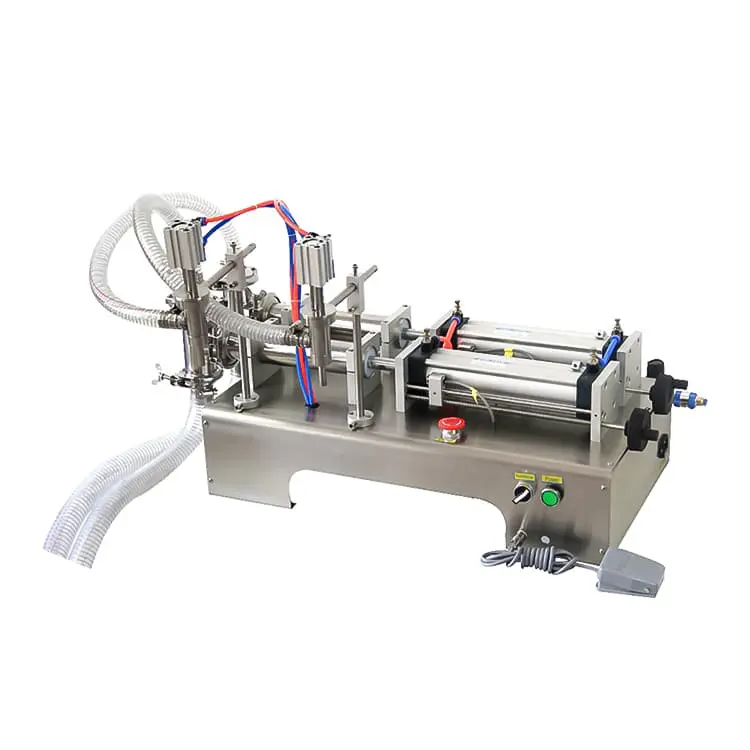

Choosing between an automatic and a semi-automatic liquid filling machine is one of the most important decisions when planning or upgrading a filling line. The right choice directly affects production efficiency, labor cost, filling accuracy, scalability, and return on investment (ROI).
This guide breaks down the differences clearly and helps you decide which option fits your business best.
A semi-automatic liquid filling machine requires manual involvement for part of the operation—usually bottle placement, start/stop control, or container removal—while the machine handles the filling process itself.
Manual bottle loading and unloading
Operator starts each filling cycle
Lower initial investment
Simple structure and easy maintenance
Small and medium-sized factories
Startups and pilot production lines
Low to medium production volumes
Frequent product changes or short runs
An automatic liquid filling machine performs the entire filling process without manual intervention, often integrating with capping, labeling, and packaging systems to form a complete production line.
Automatic bottle feeding, filling, and discharge
High-speed and consistent output
PLC & HMI control for precision and automation
Designed for continuous production
Medium to large-scale manufacturers
High-volume production lines
Factories focused on efficiency and labor reduction
Standardized product formats
| Feature | Semi-Automatic Filling Machine | Automatic Filling Machine |
|---|---|---|
| Automation Level | Partial | Full |
| Production Speed | Low to Medium | Medium to High |
| Labor Requirement | High | Low |
| Initial Cost | Lower | Higher |
| Filling Accuracy | Good | Excellent |
| Scalability | Limited | High |
| Best For | Small batches, startups | Mass production |
If your production volume is limited and labor cost is manageable, a semi-automatic solution provides flexibility with minimal upfront investment.
Although automatic machines cost more initially, they often deliver faster ROI through:
Reduced labor expenses
Higher output per hour
Lower product waste
Consistent filling accuracy
For long-term growth, automation is usually the more economical option.
Ask yourself the following questions:
Under a few thousand units/day → Semi-automatic
Tens of thousands/day → Automatic
Low to high viscosity liquids (water, oil, detergent, shampoo, chemicals) can be handled by both, but automatic systems offer better stability at scale.
For regulated or branded products, automatic machines provide better control and repeatability.
If expansion is expected, investing in automation early avoids costly upgrades later.
Cosmetics & Personal Care: Automatic machines ensure uniform filling and brand consistency
Food & Beverage: Automation improves hygiene and throughput
Chemical & Detergent: Automatic filling reduces operator exposure and increases safety
Small OEM Producers: Semi-automatic machines offer flexibility and low entry cost
There is no one-size-fits-all answer.
Choose a semi-automatic liquid filling machine if you prioritize flexibility, low investment, and small-batch production.
Choose an automatic liquid filling machine if your goal is high efficiency, scalability, and long-term cost savings.
The best solution is the one that matches your current needs while supporting your future growth.
If you’re unsure which liquid filling machine fits your production line, our team can help you evaluate your product, capacity requirements, and budget to design a customized filling solution.
Contact us today for a professional consultation or quotation.


