


English
Views: 0 Author: Site Editor Publish Time: 2026-01-04 Origin: Site
(Food, Chemical, Cosmetic, Pharmaceutical)
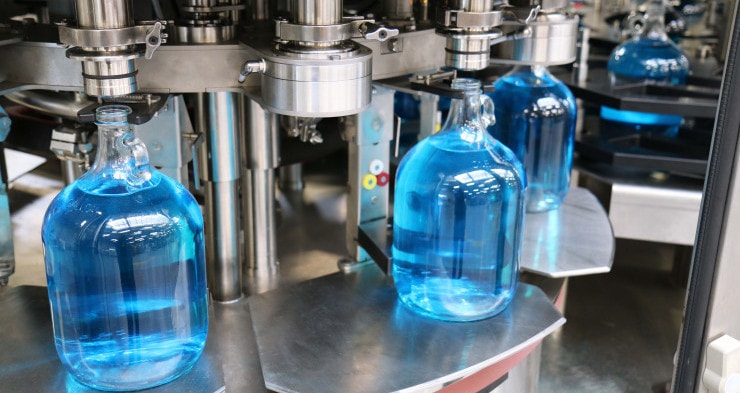

Liquid filling machines are essential across many industries where accuracy, hygiene, efficiency, and consistency are critical. From food and beverages to pharmaceuticals, the right filling technology ensures product quality, regulatory compliance, and scalable production.
Below is a detailed look at the four most common industries that rely on liquid filling machines—and how their requirements differ.
The food industry demands high hygiene standards, precise portion control, and fast production speeds.
Water, juice, milk, yogurt drinks
Edible oils, sauces, dressings
Syrups, honey, liquid condiments
Food-grade stainless steel (SUS304 / SUS316)
Easy cleaning and CIP-compatible designs
Accurate volume or weight control
Compliance with food safety standards
Gravity filling machines (low-viscosity liquids)
Piston filling machines (thicker sauces and oils)
Automatic filling lines for mass production
Why automation matters:
High-speed automatic filling ensures consistent taste, reduced waste, and compliance with food regulations.
Chemical products often involve corrosive, hazardous, or foaming liquids, requiring specialized machine designs.
Detergents and cleaning liquids
Industrial chemicals and solvents
Disinfectants, bleach, acids
Corrosion-resistant materials (PTFE, PVC, SUS316)
Anti-drip and anti-foam filling nozzles
Safety-focused operation and enclosure options
Explosion-proof or sealed designs (when required)
Corrosive liquid filling machines
Servo-controlled piston fillers
Fully automatic filling systems to reduce manual contact
Why automation matters:
Automated filling minimizes operator exposure, improves safety, and ensures consistent chemical dosing.
Cosmetic products emphasize appearance, consistency, and brand image, making precision filling essential.
Shampoo, conditioner, lotion
Creams, gels, serums
Perfume, toner, essential oils
High filling accuracy for premium branding
Gentle filling to protect product texture
Compatibility with multiple bottle shapes and sizes
Clean, elegant machine design
Servo piston filling machines
Peristaltic filling machines (small volumes)
Automatic filling and capping lines
Why automation matters:
Automated systems ensure uniform product presentation and support high-volume cosmetic production.
The pharmaceutical sector requires the highest level of precision, cleanliness, and regulatory compliance.
Syrups and oral liquids
Medical solutions and suspensions
Disinfectants and healthcare liquids
Extremely high filling accuracy
Sterile or cleanroom-compatible designs
Validation-ready components
Full traceability and process control
Peristaltic filling machines
High-precision piston fillers
Fully automatic filling systems with monitoring
Why automation matters:
Automation reduces human error, ensures dosage accuracy, and supports compliance with pharmaceutical standards.
| Industry | Key Focus | Typical Filling Speed | Automation Level |
|---|---|---|---|
| Food & Beverage | Hygiene & efficiency | Medium–High | Semi / Full |
| Chemical | Safety & durability | Medium–High | Full |
| Cosmetic | Precision & appearance | Medium | Semi / Full |
| Pharmaceutical | Accuracy & compliance | Medium | Full |
When selecting a liquid filling machine, always consider:
Liquid viscosity and chemical properties
Required filling accuracy
Production volume and scalability
Safety and regulatory needs
Each industry has unique challenges, and the right filling technology can significantly improve productivity and product quality.
Whether you are producing food, chemicals, cosmetics, or pharmaceuticals, a properly designed liquid filling machine can optimize your entire production process.
Contact us today to get a customized liquid filling solution tailored to your industry and production needs.


